
"related to raw"
9000 article(s) found
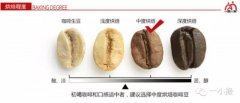
Roaster Skills Coffee Knowledge Roasting Coffee Beans
More than a decade ago, the technology of coffee roasting was often secret. Since the employees of roasting factories usually became competitors independently, it was common for inheritance between father and son or relatives. In addition, the purchase cost of large machines was quite expensive, and the threshold for roasting coffee by themselves was too high, making coffee roasting a monopoly of a few large factories.

Do baristas like to learn? what are the main jobs of baristas? What are the positions in the coffee industry?
Professional coffee knowledge exchange more coffee bean information please follow the coffee workshop (Wechat official account cafe_style) guide Hello, I went to make coffee? Did you become a barista? Why don't you pull a flower? I want the swan ~ every cup of coffee we drink, it goes from the production area to the hands of consumers, but after a long and complex industrial chain ~ so, you still think that the coffee industry

Coffee beans Yunnan BM species (Blue Mountain species) Coffee raw beans
The top Yunnan coffee variety, growing at 1500 to 2000 meters, is BM coffee (bm, the most customary explanation should be the Blue Mountain coffee introduced from Jamaica), grown in Simao and Baoshan areas of Yunnan. After excellent processing, the bean shape is neat and uniform, the silver skin is very clean after washing, the content of defective beans is very small, and the texture is relatively hard. Baked blue mountains in Yunnan, bite up

Nicaragua Linas Estate Single Bean Grading, Price, Raw Beans and Roasting Curve
Professional barista exchange Please pay attention to coffee workshop (Weixin Official Accounts cafe_style) Nicaragua Linas estate single bean classification, price, green beans and roasting curve Nicaragua is one of the main coffee producing countries, producing deep quality coffee, even in Asia famous Guatemala Antigua Mountain coffee also imports green beans to Nicaragua, Nicaragua coffee although in Asia

Introduction of semi-washing method for the treatment of high-quality coffee and raw beans
It is a relatively new and rare method. This method is also suitable for processing local coffee only in specific areas of some countries where there is a long drying period in the climate. The coffee produced by this method is sticky, and the mucus is not removed with fermentation in the tank. Therefore, the coffee produced by this semi-wet treatment contains moisture treatment.

Introduction to the Variety characteristics of Coffee Flavor description treatment method in Bogut Jade Manor, Panama
Panamanian Emerald Manor introduction Coffee varieties: Geisha, Catuai, Caturra planting altitude: 1400-1700m annual rainfall: 3200 mm average temperature: about 14-25 ℃ soil types: volcanic soil classification standard: SHB treatment method: manual harvest related certification: Nash A raw bean specification: 18 mesh harvest year: 2015 coffee varieties: Geisha, Cat

What kind of utensils are suitable for brewing Humbera Coffee beans? description of the characteristics and flavor of Hambela Huakui 6.0 coffee story
Professional Coffee knowledge Exchange for more information on coffee beans, please refer to the coffee workshop (Wechat official account cafe_style) EthiopianSidamoShakissoNatural Sakui Coffee beans 01 | brief introduction of Sakui Coffee Bean producing areas Hambella.

Description of raw bean flavor of Jamaica Blue Mountain Mavis bank Grade 1
The unique flavor of Blue Mountain Coffee is related to its geographical location and climatic conditions. Generally speaking, south of the Tropic of Cancer and north of the Tropic of Cancer, this area is suitable for growing coffee, called the coffee belt. Jamaica is just south of the Tropic of Cancer. The blue mountain is steep, the air is fresh, there is no pollution, it rains all the year round, and there is a great temperature difference between day and night, which has a unique and fertile new volcanic soil. Most

A brief analysis of the common coffee bean treatment methods the differences between coffee bean treatment methods and their advantages and disadvantages
Professional coffee knowledge exchange more coffee bean information please follow the coffee workshop (Wechat official account cafe_style) how coffee is made, several common coffee raw bean treatment methods are well known, there are many ways to treat coffee beans, but do you know the difference between these treatments? Some of the most common treatments, the sun treatment, will first turn the mature or semi-mature

Will the packaging materials of raw coffee beans affect the flavor of coffee beans? what is the best packaging for raw coffee beans?
Sensory degradation of raw coffee beans may cause significant financial losses to producers, traders and roasters. However, although a certain degree of degradation is inevitable over time, the materials of coffee packaging may have a significant impact on the shelf life and quality of coffee beans. Jute, high barrier plastic, vacuum: which is really the best? How much effect does the material actually have on beans?
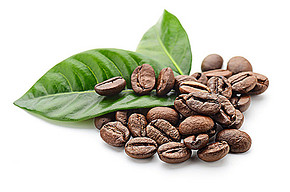
How to bake Colombian coffee beans
Following Cafe Review (official Wechat account vdailycom) found that roasting is the source of coffee flavor when a beautiful cafe opens its own shop. Roasting raw beans is called roasting. Raw beans cannot be drunk without baking. Roasting coffee beans has determined 80% of the taste of coffee. The roasting process is very tricky. If the fire is too strong, the outer ripeness is endogenous, and the fire is too weak, then the coffee is overripe. Roast coffee beans

What are the storage methods of raw coffee beans? how long can the raw coffee beans be kept?
When the raw coffee beans are not roasted, the color is relatively light, while the roasted beans will be darker when the seeds have been taken out, and then the drying process is carried out. It is best to lay the floor for the sun to dry, and the flavor is better. But if it rains, it can also be dried by machine, but the temperature should be controlled. Dry and then polish. Generally speaking, washed beans are blue-green and beautiful in appearance.

Evaluation of Sun Yega Coffee beans: the difference between Red Cherry Coffee beans and aricha Coffee beans
Professional coffee knowledge exchange more coffee bean information please follow the coffee workshop (Wechat official account cafe_style) Ethiopian coffee mainly has eight major producing areas, namely: Lekempti, Limu, Illubabor, Djimmah, Harar, Teppi/Bebeka, Sidamo, Yirgacheffe. Yejasuefei is a small town in Ethiopia, 1700-2100 meters above sea level

How to roast Colombia coffee beans Colombia coffee beans are inexpensive but of high quality
Professional coffee knowledge exchange More coffee bean information Please pay attention to coffee workshop (Weixin Official Accounts cafe_style) Roasting is the source of coffee flavor. Roasting raw beans by fire is called roasting. Raw beans cannot be drunk without roasting. Roasted coffee beans have determined 80% of the taste of coffee. The roasting process is very difficult. If the fire is too strong, the external ripening is endogenous, and if the fire is too weak, the internal ripening is overdone.

What are the common coffee beans? coffee beans with relatively low acidity are recommended.
Ethiopia-Mocha (special flavor): for the origin of coffee, small particles, dry, turquoise, with a special aroma and sour taste. Ethiopia grades NO.1~NO.8 according to the blending rate of defective beans. Characteristics: fragrant-strong, sweet-medium, acid-medium, alcohol-strong, bitter Java coffee producing area: Java, Indonesia belongs to Arabica coffee. After baking

Introduction to the taste of high-quality coffee beans in the producing area of Mexican coffee flavor manor
Bordering the United States in the north and Guatemala in the southeast, Mexico is the third largest country in Latin America. The climate is complex and diverse, and the topography is dominated by plateaus and mountains. The average temperature in most parts of the plateau is 10-26 ℃, and the climate is relatively mild. The country started its coffee industry in the 19th century, and its output is the third largest in Latin America after Brazil and Colombia.

Yunnan BM species (Blue Mountain species) Fine Coffee Raw Bean Yunnan Fine Coffee Manor Top Yunnan
The top Yunnan coffee variety, growing at 1500 to 2000 meters, is BM coffee (bm, the most customary explanation should be the Blue Mountain coffee introduced from Jamaica), grown in Simao and Baoshan areas of Yunnan. After excellent processing, the bean shape is neat and uniform, the silver skin is very clean after washing, the content of defective beans is very small, and the texture is relatively hard. Baked blue mountains in Yunnan, bite up
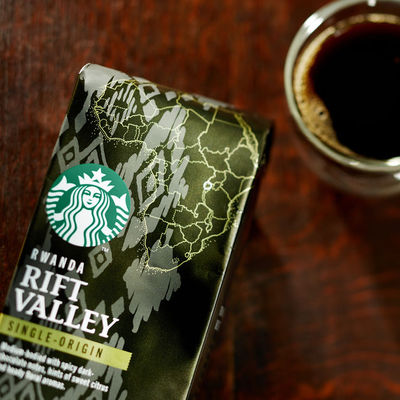
Blue Mountain Coffee purchase Guide the latest market and purchase strategy of Blue Mountain Coffee
The Blue Mountain of Jamaica is the highest mountain in the Western Caribbean, with an elevation of 2256 meters, which is dominated by fertile volcanic soil. Rain Water is rich, temperature and sunshine are very suitable for the growth of coffee trees, so the quality of Blue Mountain coffee is outstanding, coupled with a relatively small output, with an annual output of less than 2500 tons. In addition, due to historical reasons (discussed later), the Japanese UCC Company has bought most of the beans, and the price has been high.
Ethiopia Harald G4 | EthiopiaHarrar Grade4 African raw bean production
Ethiopian Harald G4 | EthiopiaHarrar Grade4 Harald coffee is cultivated between altitude 1800m2500m by natural drying and exported to countries around the world through the city of Dire Dawa. Because of its high popularity and low production, the price is high relative to its grade, and it is one of the most beloved premium coffee in the world. Rich

The difference between mechanical picking and manual picking of coffee beans-the difference between cocoa beans and coffee beans
The difference between mechanical picking and manual picking of coffee beans-the biggest advantage of manual picking is that the picking process is more fine, which can reduce some losses in the picking process. First, pickers can pick and screen at the same time and discard green and rotten fruits. Second, the picking basket is relatively small and easy to carry, and the grapes squeeze each other so that they are relatively broken.